
THE COLUMBIA LIGHTHOUSE PROJECT STAFF
With extensive experience and a fervent commitment to suicide prevention, our staff provides the support you need to administer the Columbia Protocol to identify suicide risk and determine the level of assistance each person needs.
-
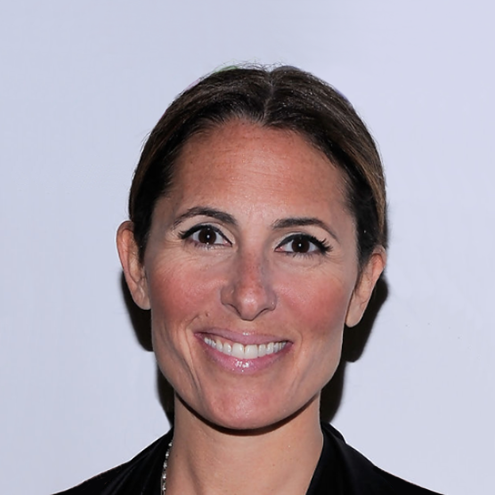
Kelly Posner Gerstenhaber, Ph.D.
Director
Dr. Kelly Posner Gerstenhaber is a Professor of Psychiatry at Columbia University and her work is saving lives all over the globe. The former President of the American Psychiatric Association noted her work with the Columbia Protocol could be “like the introduction of antibiotics.” The architect of Zero Suicide and the U.S. President’s Commission on Mental Health said, “Her work is equivalent to the discovery of a vaccine with the ability to prevent death on a massive scale.” The U.S. Department of Defense said her work is “nothing short of a miracle” and that “her effective model of improving the world will help propel us closer to a world without suicide,” and The White House highlighted the Columbia Protocol app as helping to achieve the President’s mental health and suicide prevention initiatives. The CDC noted that her work is “changing the paradigm in suicide risk assessment in the U.S. and worldwide.”Dr. Posner was awarded The Secretary of Defense Medal for Exceptional Public Service for her work leading to suicide reduction across the nation and honored at the International Symposium on Suicidology and Public Health with the Exceptional Public Service Award in Suicidology for “her landmark contributions to mental health.”Dr. Posner’s work has been noted in a keynote speech at the White House and in Congressional hearings, and she gave the lead presentation in a U.S. Senate forum on school safety after Parkland. Jim Shelton, former Deputy Secretary of the U.S. Department of Education under President Obama, says her work “has the potential to keep the 64 million children in our schools safe physically and mentally by helping prevent school violence.” Stand with Parkland parents said, “We found another big piece of the school shooting puzzle – an antibiotic for suicide. This … could fundamentally change the game for early identification and intervention. We found the first thing to interrupt the pathway to violence.”Leadership of Israel’s national suicide prevention program articulated the Columbia Protocol’s impact: “It’s not only saving millions of lives but in Israel it is literally changing the way we live our lives. We have the C-SSRS as a vehicle for a cultural change. The idea of asking about suicide using a simple yet proven evidence-supported tool has gone further in Israel than just a screening measure. It helps give permission or sends the message that you can talk and ask about anything, empowering people to have a voice.”Dr. Posner gave the invited presentation on tackling depression and suicide at the first European Union high level conference on mental health. She was recognized as the Most Distinguished Alumna of her graduate school at Yeshiva University in the past 50 years and was named one of New York magazine’s “Most Influential.” In 2016 she was honored with the Angel Award for New York City & State’s Responsible 100, and the Ann Vanderbilt Award for Achievement Partnership with Children. In 2014 she received The Spero Award for Excellence and Profound Commitment to Community Psychiatry, and in 2013, she was awarded with the New York State Suicide Prevention Award.Dr. Posner was commissioned by the FDA to develop a scientific approach to suicide risk detection that has become the gold standard for suicide monitoring and is ubiquitous across the U.S and worldwide and she is the leading expert on medications and drug safety. The FDA has characterized her work as “setting a standard in the field” and a lead article in The New York Times called it “one of the most profound changes of the past sixteen years to regulations.” She has been instrumental in prevention efforts across the government, partnering with federal agencies including the Department of Homeland Security and Department of Justice, working hand in hand on workforce prevention and fitness for duty.As a renowned spokesperson on suicide prevention, the treatment of depression, anxiety, and medication safety among others, she has made extensive appearances on NBC, CBS, World News Tonight, CNN, and many other global media forums.Dr. Posner has been appointed Chair of the Governor’s Veterans’ Suicide Prevention Task Force in New York. Her scholarly work has been included in the compendium of the most important research in the history of the study of suicide and she was recognized as one of top 20 most influential scientists from Columbia University across all areas of medicine over the past 10 years and Dr. Posner was honored to be included on the 2024 Forbes 50 over 50 list. -
Keita Franklin, Ph.D.
Co-Director
Dr. Franklin is the Co-Director of the Columbia Lighthouse Project. Dr. Franklin has spent her 25 year career driving complex organizational and policy change in the federal sector before recently transitioning to the private sector, to include several initiatives implementing suicide screening protocols across the federal enterprise. She has served as a senior executive in both the Department of Defense (DoD) and the Department of Veteran Affairs (VA), where she was the principle advisor on all matters related to suicide prevention. As a national leader in the suicide prevention, Dr. Franklin was responsible for leading a multi-discipline team of experts in the advancement of evidence-based prevention practices for over three million active duty members, 20 million veterans, and their families. Dr. Franklin has represented DoD and the VA during testimony in front of both chambers of Congress and she has advised the Office of the President, the Domestic Policy Council, and the National Security Council. An innovative leader, she spearheaded a national effort to close the gaps between the Department of Defense and the Department of Veteran Affairs by authoring a presidential Executive Order addressing critical periods of risk for servicemen, women and veterans. A recognized expert, Dr. Franklin serves on multiple national-level committees such as the National Academies of Sciences, the Action Alliance for Suicide Prevention, the Fort Hood Task Force, and the American Association of Suicidology.
Since transitioning to the private sector, Dr. Franklin has been instrumental in the advancement of mental health literacy across the nation and she has championed training on evidence-based practices with the goal of obtaining more efficacious mental health care outcomes for at-risk population groups. She also serves as the Chief Clinical Officer at Loyal Source and consults with many industries on key wellness areas to include suicide prevention, mental health, and substance abuse. Dr. Franklin has a PhD in social work from Virginia Commonwealth University and an advanced certificate from the Center for Advancement of Research Methods and Analysis (CARMA). Dr. Franklin holds certificates from Harvard Kennedy School Executive Education on “Leading Large Organizational Change” and “Women in Leadership” as well as the University of North Carolina Chapel Hill Kenan-Flagler Business School course on “Executive Leadership.”
-
Kseniya Yershova, Ph.D.
Deputy Scientific Director
Dr. Kseniya Yershova is in charge of research-related and program-evaluation consultation across public health settings, academia and clinical trials; review of linguistic validation when the protocol is translated into country-specific languages; and scientific writing and peer review. Her research and clinical interests include psychometrics, assessment, pediatric ADHD, psycholinguistics, and psychodynamic- and attachment-informed therapies. She also lectures on developmental psychopathology and supervises psychiatry and psychology trainees in clinical evaluation and treatment planning at Columbia University Medical School. She has a doctorate in clinical psychology from the University of California, Berkeley.
-
Adam Lesser, LCSW
Deputy Director for Implementation
Adam Lesser is a licensed clinical social worker, Assistant Professor of Clinical Psychiatric Social Work in the Division of Child and Adolescent Psychiatry at Columbia University College of Physicians and Surgeons, and a Deputy Director for the Columbia Lighthouse Project at the New York State Psychiatric Institute where he assists with all suicide prevention activities related to public health including the international dissemination and implementation of the Columbia Protocol and has trained over 100,000 individuals on the Columbia tools. Previously, he was the youth suicide prevention project director at the Georgia Department of Behavioral Health and Developmental Disabilities, where he directed the statewide implementation of the Columbia Protocol and other suicide prevention tools and efforts through their Garrett Lee Smith Suicide Prevention Grant from SAMHSA. He has published, presented internationally and consulted to state and local governments on best practices for suicide risk identification and prevention. His work has been featured in Social Work Today Magazine and on Atlanta National Public Radio, CNN-espanol, Univision and other local print and television media outlets. He has a master’s degree in social work from Smith College and a bachelor’s degree in economics from Tufts University.
-
Natalya Paykina, M.A.
Senior Administrative Director
Natalya Paykina brings structure, continuity, and judgment to the Columbia Lighthouse Project’s global licensing and research-use activities for the Columbia–Suicide Severity Rating Scale (C-SSRS). She guides matters from initial inquiry and protocol review through agreement execution, implementation support, invoice readiness, and long-term institutional follow-through.
Her work integrates scientific, contractual, financial, operational, and institutional requirements across sponsors, clinical research organizations, investigators, academic and healthcare institutions, vendors, and internal teams. Drawing on extensive knowledge of the Project’s operational history, she recognizes relationships across studies, organizations, agreements, and prior decisions and translates them into coherent, workable paths forward. Her approach combines rigor with practicality, allowing safeguards to support progress rather than impede it.
Natalya designed the Project’s licensing database as the central operational record for study and protocol history, organizational relationships, licensing scope, agreement status, financial information, training, translations, and prior decisions. She also stewards a licensing portfolio numbering in the thousands and multilingual resources spanning more than 150 languages across more than 80 countries. These systems preserve document and version integrity, support the accurate matching of requests to C-SSRS instruments and materials, and maintain continuity across amended, related, and long-running matters.
She oversees the licensing-to-invoice workflow supporting several million dollars in annual invoicing, as well as C-SSRS training, certification, and translation operations for research use worldwide. Alongside daily execution, she develops workflows, decision structures, documentation standards, and quality controls that convert recurring requirements into consistent operational practice, reduce dependence on case-by-case handling, and preserve institutional knowledge as the Project’s work expands.
Together, these activities support the reliable use of the C-SSRS in multinational clinical research and drug development, including the assessment of treatment-emergent suicidal ideation and behavior.
Natalya brings more than 26 years of experience in clinical research and healthcare administration. She coordinated more than two dozen pharmaceutical industry-sponsored clinical trials and served as Columbia site coordinator for the Multimodal Treatment Study of Children with ADHD, the largest NIMH-funded treatment study of ADHD. She later served as chief coordinator for the Preschool ADHD Treatment Study, the first NIMH-funded pharmacological treatment study of preschoolers with ADHD.
She holds a master’s degree in developmental psychology from Teachers College, Columbia University, and a bachelor’s degree in psychology and economics from Hunter College, City University of New York.
-
Samantha Ragsdale
Director of Advancement & Operations
Samantha Ragsdale directs the Columbia Lighthouse Project’s day-to-day operations and the advancement of the Project through mission delivery, capacity building, strategic funding opportunities, dissemination of educational tools and resources, and partner engagement. Samantha holds a B.A. in psychology and sociology and has over 25 years of experience as a nonprofit leader building mission impact and organizational capacity. As Director of Development, Samantha raised over $30 million for nonprofit causes and, as Director of Education, Samantha led award-winning school-based education programs and public awareness initiatives. Across nonprofit sectors, she has led fundraising, communications, operations, program design and implementation, impact measurement, and strategic partnerships. Samantha is passionate about bringing her nonprofit background to the lifesaving mission of the Columbia Lighthouse Project and advancing a public health approach to suicide prevention.